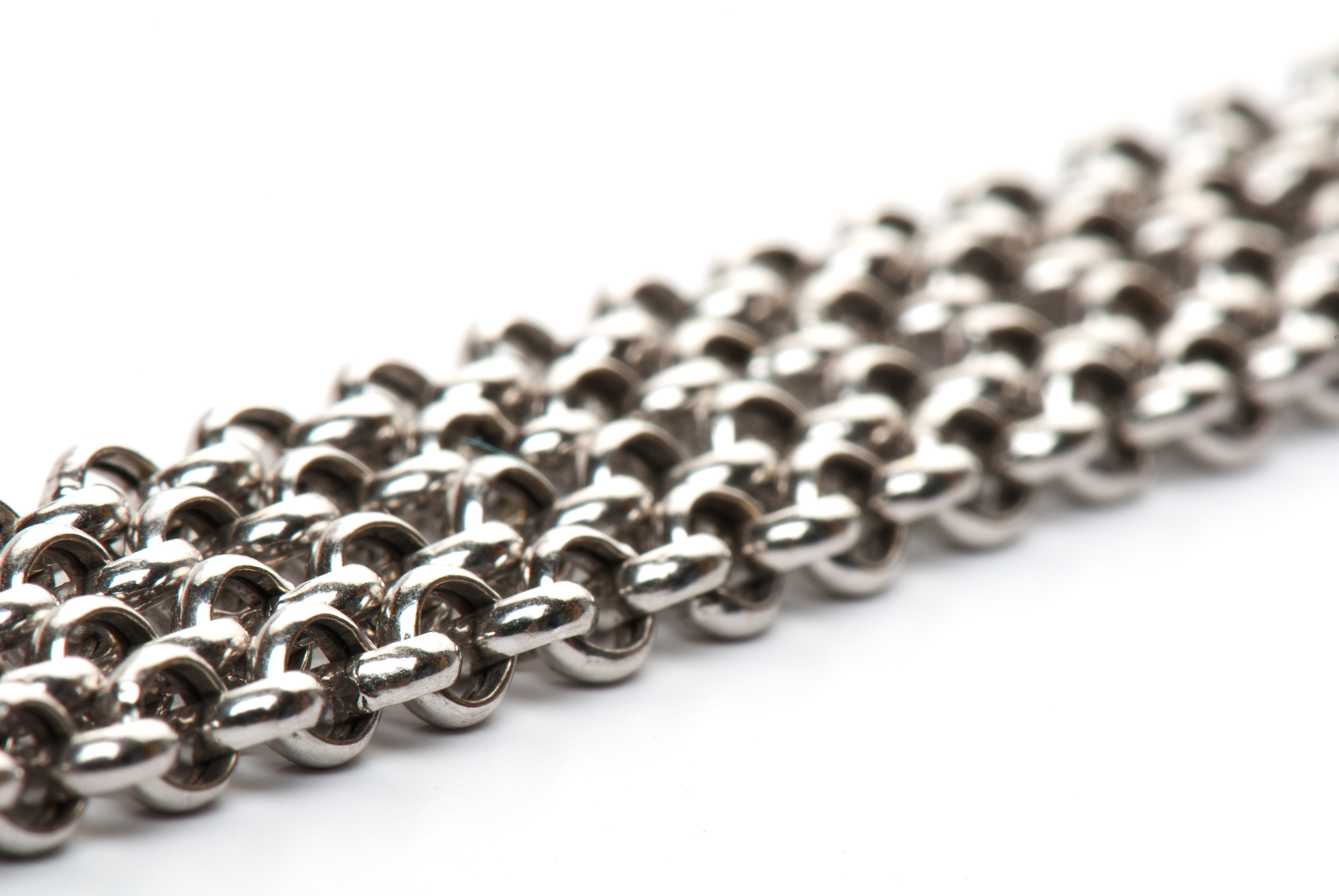
In 1986, Run-DMC released "My Adidas," a song that would change the relationship between hip-hop and brands forever. But look at any photo from that era, and you'll notice something else the trio made iconic: the thick gold rope chain, worn without a shirt, stacked sometimes two or three deep. It wasn't just an accessory. It was a statement.
Four decades later, hip-hop's relationship with jewelry has evolved into something far more complex and influential than those early gold ropes might suggest. The genre has birthed entirely new categories of jewelry, elevated craftspeople to celebrity status, and forced the traditional luxury world to reckon with aesthetics and values it had long ignored.
This is the story of how that happened — and why it matters to anyone who cares about where jewelry is going.
The Economics of Visibility
To understand hip-hop jewelry, you have to understand the context from which it emerged. In communities where traditional paths to wealth were systematically blocked, visible symbols of success took on heightened significance. Jewelry wasn't just decoration; it was proof. Proof that you'd made it, proof that the system hadn't beaten you, proof that could be worn on your body and shown to the world.
"My chain wasn't just a chain. It was my résumé. It told people I was serious before I opened my mouth."
— Slick Rick, in a 2019 interview
This context produced an aesthetic philosophy fundamentally different from European luxury traditions. Where old-money jewelry culture prized subtlety and discretion — the small but perfect diamond, the understated tennis bracelet — hip-hop jewelry culture embraced maximalism and visibility. If the point was to be seen, then being subtle defeated the purpose.
This wasn't naïveté or lack of sophistication. It was a different set of values, applied consistently. And it would eventually influence jewelry design far beyond its origins.
The evolution from 1980s rope chains to today's Cuban links reflects both changing aesthetics and advances in manufacturing capability.
The Rise of the Custom Jeweler
In the traditional luxury jewelry world, the designer is anonymous. You buy a Cartier piece, not a piece by whoever designed it. The brand is the star.
Hip-hop inverted this completely. When Pharrell commissioned a chain, people wanted to know who made it. When Lil Uzi Vert paid $24 million for a pink diamond forehead implant, the jeweler who created the piece — Elliot Eliantte — became a celebrity in his own right.
This shift created an entirely new category of luxury craftsperson: the celebrity jeweler. Names like Jacob Arabo (Jacob the Jeweler), Ben Baller, and Elliot Eliantte became brands unto themselves, their client lists functioning as both portfolio and credential. They weren't just making jewelry; they were collaborating with artists on wearable sculptures that would appear in music videos, on magazine covers, on stage.
The creative freedom in these relationships often exceeded anything available in traditional luxury houses. Want a chain shaped like a lightning bolt with 3,000 diamonds? Want a pendant that's a miniature sculpture of your childhood home? Want grillz with removable stones so you can change the color scheme to match your outfit? These requests, which a traditional jeweler might dismiss as impossible or unseemly, became the bread and butter of hip-hop jewelry.
Technical Innovation
Necessity is the mother of invention, and hip-hop's specific demands pushed jewelry craft in new directions.
Take the Cuban link chain, now ubiquitous but once a specialty item. The design requires precise engineering to achieve the right weight, drape, and durability while remaining comfortable for daily wear. Modern Cuban links from top makers are marvels of manufacturing: flexible but sturdy, heavy but balanced, flashy but wearable. The technique has been refined over decades, driven largely by hip-hop demand.
Or consider grillz, the removable dental jewelry that has gone from subculture signifier to mainstream accessory. Creating a custom grill requires dental impression work, precious metal casting, and often intricate stone setting — all for a piece that needs to fit perfectly in one of the human body's most sensitive areas. The craft has evolved into a genuine specialty, with top makers commanding waitlists and premium prices.
Or pendant engineering: the challenge of creating a piece that's heavy enough to satisfy (and significant pieces often weigh half a pound or more) while remaining comfortable and properly balanced. Get the weight distribution wrong, and the chain constantly twists or the pendant flips backward. The best makers have developed proprietary solutions to these problems.
The Crossover
For years, the traditional jewelry industry regarded hip-hop aesthetics with something between skepticism and disdain. Too flashy. Too gaudy. Not our customer.
That position has become increasingly untenable.
When Pharrell Williams became Men's Creative Director at Louis Vuitton in 2023, he brought his jewelry sensibilities with him. When high jewelry houses launched collections featuring bold, chunky gold pieces, they were responding to tastes shaped by hip-hop. When Tiffany & Co. collaborated with A$AP Ferg, or Cartier dressed hip-hop artists for major events, they were acknowledging an influence they'd previously ignored.
The crossover isn't just aesthetic; it's commercial. The generation that grew up with hip-hop is now the generation with spending power. Their tastes, shaped by music videos and Instagram, don't align neatly with traditional luxury codes. Brands that want to remain relevant have had to adapt.
This doesn't mean the traditional luxury approach is disappearing. There's still plenty of market for subtle elegance and old-money aesthetics. But the idea that there's one right way to do jewelry — that hip-hop's approach was somehow less valid — has been thoroughly debunked.
What Hip-Hop Taught the Industry
Beyond aesthetics, hip-hop culture introduced several concepts that are now influencing jewelry more broadly:
Personal narrative. Hip-hop jewelry is often deeply autobiographical — pendants depicting childhood homes, coordinates of significant locations, names of family members. This emphasis on personal meaning over generic luxury has influenced custom jewelry across all segments.
The jeweler as artist. The celebrity jeweler phenomenon established that who makes your piece matters, not just what brand it comes from. This has opened space for independent designers to compete with established houses on the basis of creativity and craft.
Joyful maximalism. Sometimes more is more. Hip-hop gave permission for exuberance in a category that had often prized restraint above all else. That expanded the range of what jewelry could be.
Jewelry as investment and insurance. The practice of converting cash to jewelry — portable, tangible, and retaining value — reflects a sophisticated understanding of asset allocation, even if it emerged from necessity rather than financial planning.
Where It Goes From Here
The next generation of hip-hop jewelry is already emerging, and it's fascinating.
Artists like Tyler, the Creator have embraced colored stones and unconventional designs that blend hip-hop scale with art-world sensibilities. Younger artists are incorporating vintage pieces alongside custom work, mixing eras and aesthetics. Some are moving toward sustainability, questioning the traditional emphasis on mined diamonds and newly extracted gold.
The custom jewelers are pushing boundaries too. Advances in CAD design and 3D printing allow for forms that would have been impossible to produce even a decade ago. The line between jewelry and sculpture continues to blur.
And the influence continues to flow outward. The next time you see a bold gold piece in a high jewelry collection, or a major brand releases something unexpectedly maximal, remember where that permission came from. Remember the artists and makers who built a parallel jewelry culture because the existing one didn't speak to them.
They didn't just make jewelry. They expanded what jewelry could mean.